


Choosing a supplier of cork granulates means quality and innovation
The role of cork granulates in modern industry
In recent years, the focus on natural and sustainable materials has grown exponentially, prompting many industries to reconsider their production choices. In this context, cork has emerged as a valuable resource, not only for its inherent properties but also for its role in the circular economy. Among the most versatile forms in which cork is used are cork granulates, small fragments of bark processed to meet specific needs in different sectors.
The versatility of cork is what makes it a preferred choice for many industrial applications. Cork granulates, in particular, are valued for their lightness, elasticity, and thermal and acoustic insulation capabilities. These qualities make them indispensable in industries ranging fromconstruction to footwear, from design to food packaging. However, to exploit the full potential of this material, it is essential to rely on specialized suppliers who can guarantee high quality standards and customized solutions.
Suppliers of cork granulates play a key role in modern industry, serving as a bridge between raw material and final products. These professionals not only provide raw materials, but offer technical expertise, innovation, and support to develop solutions that meet the needs of changing markets. In a competitive landscape, partnering with an experienced supplier means not only securing high-quality materials, but also accessing know-how that can make a difference in industrial and creative projects.
Cork granulates: what they are and why they are essential
Cork granulates represent one of the most versatile forms of processing cork oak bark. These are small fragments obtained by crushing and refining natural cork, available in different particle sizes to suit a wide range of applications. Their popularity is due to the unique characteristics that distinguish them from other materials, both natural and synthetic.
One of the main qualities of cork granulates is their light weight, which makes them easy to transport and process, reducing logistics costs and simplifying production processes. In addition, thanks to their cellular structure composed of millions of air chambers, granulates offer exceptional thermal and acoustic insulation. This property makes them ideal for applications such as insulation panels, floor fills and acoustic coatings.
In addition to their technical performance, cork granulates are valued for their environmental compatibility. Unlike synthetic materials, cork is biodegradable, recyclable, and produced through a process that does not harm trees. The bark is harvested at regular intervals, allowing the plant to regenerate and contributing to the conservation of cork oak forests, ecosystems crucial for biodiversity and the reduction of CO2 emissions.
Another aspect that makes cork granulates essential is their versatility. They can be used pure or combined with other materials to create innovative, high-performance products. For example, in the footwear industry, granulates are often mixed with resins to make ergonomic and lightweight soles, while in construction they are used to create lightweight screeds and high-performance insulation panels.
Processing of cork granulates
The journey that turns cork bark into ready-to-use cork granulates is an example of how tradition and innovation can coexist to create a sustainable, high-quality product. Cork processing begins with bark harvesting, an operation that takes place every 9-10 years without damaging the tree. This cyclical process not only preserves the natural resource but also contributes to the conservation of cork oak forests, which are critical to ecological balance.
After harvesting, the bark is left to season for a variable period, during which it loses some of its natural moisture and improves its mechanical properties. Once ready, the bark undergoes a crushing process, in which it is reduced into fragments of different sizes. This step is essential to obtain granulates with specific characteristics, suitable for various uses.
Next, the fragments are refined through sieving and heat treatment to ensure homogeneity and purity. During this stage, the granules can be divided according to grain size, creating categories ranging from the finest granules, ideal for precision applications, to the coarsest granules, used in areas such as construction and design.
A crucial aspect of the machining process is quality control. Suppliers of cork granulates invest in advanced technologies to monitor each stage of production, ensuring that the final product meets rigorous standards in terms of purity, strength and performance. This commitment not only ensures the quality of granulates, but also strengthens the trust of customers, who can rely on a reliable and high-performing material.
Main sectors using cork granulates
Cork granulates are distinguished by their extraordinary versatility, making them suitable for a wide range of industries. Their unique combination of natural properties, such as elasticity, thermal and acoustic insulation, and light weight, positions them as a preferred choice for various industrial and craft applications. Let’s look in detail at the main sectors that use them.
Construction: thermal and acoustic insulation
In the construction industry, cork granulates are among the most popular materials for thermal and acoustic insulation. Due to their closed-cell structure, formed by tiny air pockets, granules provide natural insulation that helps reduce heat loss in buildings. This makes them an excellent choice for lightened screeds, insulation panels, and coat systems.
Another crucial advantage for construction is the ability of cork to absorb vibration and sound, improving living comfort. Granules are often used as a filler for walls, ceilings and floors, helping to create quieter and more comfortable environments. In addition, their breathable nature prevents condensation and mold, a common problem in lesser-performing synthetics.
A particularly interesting case is their use in bioarchitecture projects. Buildings that aim for environmental sustainability and energy conservation are increasingly choosing natural materials such as cork. In this context, granulates are used for both new construction and renovation, where they enable improved energy performance without compromising structural integrity.
Design and furniture: aesthetics and functionality
The design and furniture industry has discovered in cork granulates a resource that can combine aesthetics, functionality and sustainability. Because of their ability to adapt to various shapes and sizes, granulates are used to create unique decorative surfaces, acoustic panels, furniture and home accessories. Their natural texture and the visual warmth they give off make them especially popular for interiors that focus on minimalist and sustainable design.
A significant example is the use of cork to make wall coverings and flooring, where the material not only adds a distinctive touch but also improves the thermal and acoustic comfort of rooms. In addition, granulates can be combined with natural resins to create durable, waterproof surfaces that are ideal for kitchens and bathrooms.
The growing focus on environmentally friendly furniture has led many designers to experiment with the use of cork granulates even in everyday objects, such as lamps, chairs, and coffee tables. In addition to being functional, these pieces communicate a strong message in terms of sustainability and innovation. Their production, which takes place without the use of harmful chemicals, fits perfectly with the principles of the circular economy.
How to choose a supplier of cork granulates
Choosing a reliable supplier is a critical step for any company that intends to use cork granulates in its products or processes. A quality supplier does not just offer the material, but becomes a strategic partner that can support the company with customized solutions, technical advice, and after-sales services.
Certifications and quality standards
One of the first aspects to consider is the presence of certifications attesting to the quality and sustainability of the granules supplied. Various certifications ensure that the cork comes from responsibly managed forests, while ISO quality certifications ensure high standards in manufacturing processes.
A reliable supplier must also demonstrate transparency in its production processes, offering guarantees on the origin and characteristics of granulates. For example, strict control over grain size and product purity is essential to ensure that the material meets the specific needs of different industries.
Experience and innovation
The supplier’s experience in cork processing is another important criterion. Companies with a long tradition in the industry are often able to offer superior quality materials, the result of years of perfecting production techniques. However, experience alone is not enough: a good supplier must also invest in innovation, adopting advanced technologies to improve the performance of cork and expand its applications.
For example, some suppliers use automated machinery to optimize crushing and sorting of granules, ensuring uniform quality on a large scale. Others focus on developing new types of granulates, such as those heat-treated to increase strength or those impregnated with natural resins for specific industrial applications.
Customized solutions and technical support
Every industry has different needs, and a supplier of cork granulates must be able to offer customized solutions that meet specific technical and design requirements. For example, a company that produces insulation panels might require granules of a certain particle size, while a footwear manufacturer might need a unique mix to ensure lightness and comfort.
In addition to customization, it is critical that the vendor offer ongoing technical support. This may include advice on processing methods, laboratory testing to verify granulate performance, and assistance in selecting the most suitable solutions for the required applications.
Cork Line: your partner in cork processing
In the cork processing industry, Cork Line it represents a benchmark for those seeking innovation, sustainability and uncompromising quality. With a proven track record and an unwavering commitment to excellence, the company has distinguished itself as a leader in the production of cork granulates and other customized solutions for various industries.
Why choose Cork Line
Cork Line differentiates itself by adopting advanced technologies that optimize each stage of the production process, from crushing to granulate selection. This approach ensures consistent quality products, reducing waste and maximizing efficiency. The company offers a range of cork granulates designed to meet specific needs, adapting to the demands of demanding markets such as construction, design, and packaging.
A hallmark of Cork Line is its close collaboration with clients, which enables the development of customized and tailor-made solutions. Whether it is bio-architecture, luxury goods or industrial products, the company is committed to providing materials capable of meeting every technical and aesthetic need. This customer-oriented approach not only strengthens confidence in the products of Cork Line, but also consolidates the reputation of cork as a versatile and high-quality material.
Innovation and sustainability at the core
Cork Line is committed to integrating sustainable practices into every aspect of its business. The company continuously invests to improve and expand the applications of cork.
A key element of Cork Line ‘s strategy is the circular economy: processing residues are transformed into new products, such as insulation panels and decorative coatings. This approach not only reduces waste, but also contributes to a sustainable production model aligned with global CO2 emission reduction goals.
A strategic partner for the future
Working with Cork Line means choosing a reliable partner that combines tradition, innovation and sustainability. With a focus on quality, customization and reduced environmental impact, the company is the ideal partner for those who want to integrate cork into valuable projects. Opting for Cork Line is not just a business choice, but a step toward a more sustainable and conscious future.
Cork in the circular economy: a winning model
Cork is a perfect example of how a natural material can integrate harmoniously into a circular economy model. From harvesting to processing, each stage of the production cycle is designed to minimize waste and maximize the value of the resource. This approach not only reduces environmental impact but also creates new economic opportunities for cork processors.
Recycling and reuse of cork
One of the most interesting features of cork is its ability to be recycled and reused without losing its essential properties. Processing residues can be made into granulates or other products, such as caps and decorative panels. This process not only reduces waste, but also allows each part of the raw material to be enhanced.
In addition, recycled cork is finding innovative applications in emerging industries, such as automotive and aerospace. For example, cork granulates are used as a lightweight and strong material for making structural components, helping to reduce vehicle weight and improve energy efficiency.
Future opportunities
As demand for sustainable materials increases, cork is set to play an increasingly central role in the global economy. Technological innovations are opening up new avenues for its use, making it a competitive choice even in high-tech industries. In addition, the growing focus on sustainability is prompting companies to consider cork as an environmentally friendly alternative to synthetic materials, further strengthening its market value.
Working with a quality supplier
Choosing a reliable supplier of cork granulates means investing in a material that combines sustainability, versatility and high performance. Companies that process cork with expertise and innovation represent strategic partners for those who wish to integrate natural solutions into their projects. From design to construction, cork offers unique opportunities to improve products and processes, meeting the needs of an increasingly sustainability-conscious market.
Start now to explore the potential of cork for your projects. Partner with a supplier who shares your values and goals of quality and innovation.

 One of the most important aspects of cork as a material for food packaging is its sustainability. In the context of a growing focus on waste reduction and the adoption of environmentally friendly materials, cork is positioned as one of the greenest solutions available. Its production is based on a natural process that does not involve cutting down trees: the bark of the cork oak is harvested at 9-10 year intervals, allowing the tree to regenerate completely.
 Like any material, cork has advantages and limitations. Among its strengths, the most obvious is sustainability. Cork is a natural, renewable and biodegradable material, characteristics that make it an environmentally friendly choice for food packaging. In addition, its ability to provide excellent food preservation, combined with its moisture resistance and chemical inertness, makes it ideal for a wide range of applications.
 As demand for sustainable packaging increases, the role of cork is set to grow. Technological innovations and new processing methods are expanding the possibilities for usingcork, making it increasingly competitive with traditional materials. The global food packaging market is embracing greener solutions, and cork is at the center of this transformation.
 Installing interior cork insulation is an increasingly popular solution, especially in settings where structural features or architectural limitations make it difficult or impossible to work on the building’s exterior. This approach is particularly beneficial for historic buildings, where maintaining the original appearance of the facade is a priority. Because of its ability to adapt to interior spaces, cork insulation offers a viable way to improve energy efficiency without compromising the aesthetic or cultural value of the property.
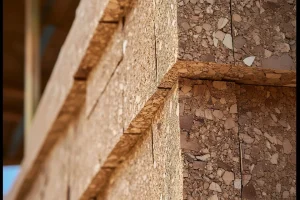 The initial cost of cork insulation may seem high compared to other insulation solutions, but it is important to consider the long-term cost-benefit ratio. Cork’s ability to reduce energy consumption translates into significant savings on utility bills, making the initial investment highly cost-effective over time. In addition, its durability and strength reduce the need for maintenance work, offering additional savings.
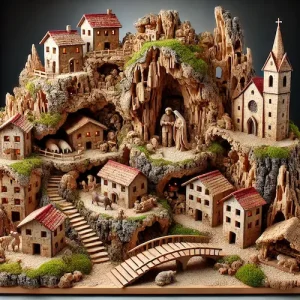 In recent years, the cork industry has seen significant growth in terms of innovation and technological development, leading to increasingly creative and practical solutions for crib making. Cork panels, once available only in simple, raw formats, now offer a range of custom options to meet specific artistic and decorative needs. Among the most interesting innovations are pre-treated panels with particularly realistic textures designed to simulate surfaces such as old stone, aged brick or worn wood. These panels allow nativity scene creators to achieve a remarkably authentic effect with minimal effort.
 Cork owes its extraordinary sound-absorbing properties to its unique cell structure. Each cubic centimeter of cork is composed of millions of microscopic air-filled cells, which act as natural barriers to sound waves. When sound hits a cork panel, acoustic energy is partly absorbed and partly dispersed, significantly reducing noise propagation. This mechanism makes cork one of the most effective natural materials for acoustic control.
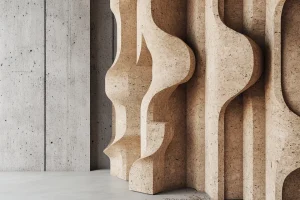 The world of natural materials is constantly evolving, and cork is no exception. In recent years, research and development have led to significant innovations in acoustic cork panels, further expanding their applications and improving their performance. One of the most interesting innovations is the integration of cork with smart technologies, which allow monitoring and optimization of acoustic conditions in real time. For example, some panels combine cork with advanced sensors that can detect noise level and automatically adjust sound absorption to maintain optimal comfort.
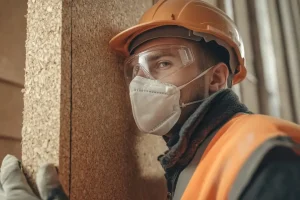 The use of cork as an insulation material is growing steadily in the
 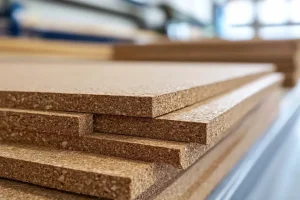 The effectiveness of cork as a sound insulator makes it an ideal choice not only for homes, but also for public and commercial spaces where noise control is a priority. From theaters to offices, cork proves to be a versatile material that improves acoustics without compromising aesthetics.
 Cork granules are not only functional and environmentally friendly, but also offer a unique opportunity to create multisensory environments that engage sight, touch, and even hearing. The natural texture of cork, combined with its insulating properties, makes it possible to design spaces that improve people’s well-being, meeting the need for comfort and serenity.
 The role of cork in ecological design is set to grow, fueled by increasing environmental awareness and the search for materials that combine innovation and sustainability. Cork granules, in particular, are a central element of this transformation because of their versatility and unique properties.
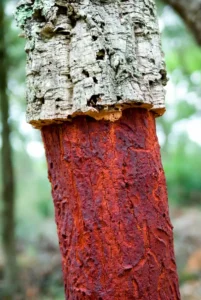
 Cork granulates stand out for their versatility, finding applications in a wide range of sectors, from construction to furniture, packaging to fashion. Due to its insulating properties, light weight, and ability to absorb shock, this natural material has become an indispensable solution to meet the needs of sustainability and functionality.
 Protecting fragile products with cork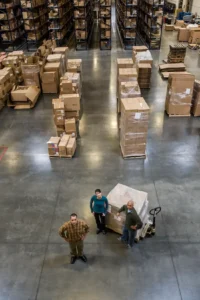

 Cork offers endless possibilities for use in the world of furniture, both for making furniture and for creating furnishings and upholstery. Its features make it suitable for any space, from homes to offices, from stores to public spaces.
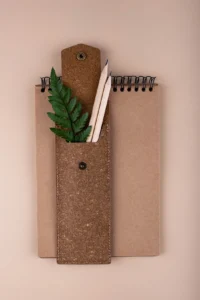 Furniture Complements
 How cork is revolutionizing interior design


