



Cork in industry: applications and benefits
In recent years, cork in industry has gained prominence as a versatile, sustainable and innovative material. From a resource traditionally used for corks and giftware, today cork has evolved to become a key component in sectors ranging from construction to design, from packaging to footwear. Due to its outstanding physical properties and the growing demand for environmentally friendly solutions, cork is redefining industry standards.
Its use is not only a response to environmental challenges, but also a testament to companies’ ability to adapt and innovate. Cork Line, for example, is one of the leading players in this transition to a more sustainable industry, thanks to its production of cork granulates and cork panels for various industries. But what makes cork so special and suitable for industry? And how is it integrated into production processes?
Cork in industry: what it is and how it is produced
Cork is a natural material made from the bark of the cork oak, an extraordinary tree found mainly in Mediterranean countries. The bark is harvested every 9-10 years without damaging the tree, which continues to grow and regenerate. This cyclical process makes cork a renewable resource par excellence, particularly valued in industry for its sustainability.
Cork processing begins with theextraction of the bark, followed by a natural curing process that lasts several months. During this stage, the bark dries and stabilizes, preparing the material for further processing. Once cork is cured, it undergoes heat treatment and a grinding process to obtain cork granulates of different sizes that can be used in a variety of industrial applications.
The technical characteristics of cork make it unique. It is lightweight, elastic, waterproof and resistant to weather, heat and moisture. In addition, it is an excellent thermal and acoustic insulator, making it indispensable in areas such as construction and design. Its rot-proofing and resistance to mold and insects further enhance its versatility.
Companies must then use advanced technologies to transform the bark into high-density cork granules, insulation panels, and other customized products. These materials find applications in numerous industrial fields, demonstrating the ability of cork to adapt to increasingly complex requirements.
Main applications of cork in industry
Cork is an extraordinarily versatile resource that can be used in a wide range of industrial applications. Due to its natural properties, it is an especially popular material in areas that require sustainable solutions without compromising performance.
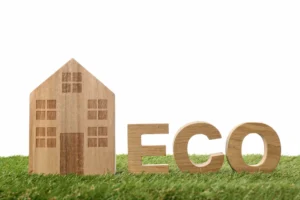
Construction and sustainable building
In the construction industry, cork is mainly used as an insulation material. Cork panels offer excellent thermal and acoustic insulation capacity, helping to improve the energy efficiency of buildings. This translates into less energy consumption for heating and cooling, resulting in economic and environmental benefits.
Cork insulation systems are a concrete example of the industrial use of this material. Due to its ability to resist moisture and weathering, cork provides lasting performance and contributes to sustainable construction. In addition, its breathable nature makes it ideal for green architecture projects, where it is essential to use natural and nontoxic materials.
Design and furniture
In the world of design, cork is experiencing a renaissance. Its unique texture and natural appearance make it perfect for creating furniture, home accessories, giftware and upholstery. In addition, its elasticity and strength make it easy to work with, allowing designers to explore new shapes and applications.
For example, seats, side tables, and decorative cork panels are increasingly in demand for their combination of aesthetics and functionality. Cork Line, with its range of customized products, is helping to make cork a major player in contemporary design, responding to the growing demand for environmentally friendly and innovative materials.
Packaging and logistics
Another area where cork is making a difference is in sustainable packaging. Because of its lightness and strength, cork is ideal for creating environmentally friendly packaging that protects products during transport. In addition, being biodegradable and recyclable, cork is a viable alternative to plastic materials, helping to reduce the environmental impact of logistics.
Cork companies: who drives innovation?
The success of cork in industry would not be possible without the commitment of companies investing in research and development of new applications. Realities such as Cork Line have played a key role in promoting the use of cork not only as a traditional material, but as a key resource for the industry of the future.
Cork Line, for example, is known for producing cork granules and cork panels for a wide range of industries. Using advanced technologies and a sustainable approach, the company has been able to innovate, creating products tailored to meet the needs of customers around the world. This ability to adapt and anticipate trends has made Cork Line a benchmark in the industry.
But Cork Line is not the only one. Many other companies are following this path, collaborating with research institutes and universities to improve the performance of cork and expand its applications. The common goal is to maximize the potential of this natural material, turning it into an indispensable resource for a more sustainable and responsible industry.
Cork by industry: environmental benefits
Industry cork stands out not only for its versatile applications but also for its outstanding environmental benefits. In the era of ecological transition, the ability of a material to contribute to a more sustainable economy has become a determining factor. Cork, thanks to its renewable nature and unique properties, is a virtuous example of how industrial innovation and environmental protection can be combined.
Renewability and zero impact
The cork extraction process is a model of sustainability. Cork oak bark can be harvested cyclically every 9-10 years without damaging the tree, which continues to live and regenerate for more than 150 years. This makes cork a renewable resource par excellence, capable of meeting production needs without compromising the ecological balance.
In addition, during its lifetime, cork oak contributes significantly to the fight against climate change. These trees absorb large amounts of CO2 from the atmosphere, helping to reduce the carbon footprint of the entire production process. According to some estimates, a cork oak forest can absorb up to 14 million tons of CO2 per year, a valuable contribution in greenhouse gas mitigation.
Circular economy: cork reuse and recycling
Cork is a material that is inherently compatible with the principles of thecircular economy. At the end of its life cycle, it can be easily recycled or reused in new production processes. This means that processing residues and used cork products never become real waste, but are turned into new resources.
It is important to reuse any production waste, incorporating it into the creation of new products such as granulates and panels. This approach not only reduces waste, but also helps to optimize the use of natural resources, strengthening the commitment to sustainable production.
Biodiversity benefits
Cork oak forests are not only an economic resource, but also a unique ecosystem that is home to an extraordinary variety of flora and fauna. These areas represent crucial habitats for many endangered species, contributing to biodiversity conservation. Sustainable management of cork forests ensures the protection of these ecosystems, creating a balance between economic development and environmental protection.
Challenges and opportunities of cork in industry
Despite its great potential and many advantages, the use of cork in industry comes with some significant challenges. The complexity of production processes, limited availability of raw materials and the need to continuously innovate are among the main obstacles companies face. However, these difficulties are also an incentive for innovation, stimulating companies to find creative solutions and explore new applications. The result is a constantly evolving cork market, with opportunities that could turn this material into an even more central resource for the global industry.
Production costs and technologies
One of the most critical aspects of processing cork is its relatively high cost compared to other materials. Bark harvesting is a laborious process, requiring skilled labor and special attention to preserve the health of the trees. Unlike many synthetic materials, which can be mass produced at low cost, cork requires long processing times, including natural curing of the bark, which takes several months.
The processing of cork into finished products also requires specific technologies and highly specialized skills. Heat treatments, grinding processes, and the creation of high-precision panels or granulates are operations that significantly affect costs. For example, making insulation panels requires careful control of densities and dimensions, factors that increase the level of complexity of the process.
However, the growing demand for sustainable materials is driving many companies to invest in research and development to optimize production costs. Innovations such as theuse of automated machinery, 3D printing with cork granulates, and the integration of more efficient processing techniques are gradually making cork more competitive in the market. In addition, these innovations not only reduce costs but also improve the quality and performance of cork products, expanding their applications.
Collaborations between research and business
 One of the most significant opportunities for cork in industry lies in collaboration between companies and research institutions. These partnerships are playing a key role in overcoming challenges related to cost and availability of the material by developing new technologies and applications that increase the versatility of cork.
For example, some research is exploring the use of cork in the automotive and aerospace sectors. Because of its light weight, shock-absorbing ability and heat resistance, cork is a promising material for making sound-absorbing panels, insulating components and lightweight structural materials. These developments could turn cork into a key resource for high-tech industries, where the combination of high performance and sustainability is increasingly in demand.
The collaborations are also resulting in innovative projects in thesustainable building sector, where cork is used to make thermal and acoustic insulation systems, flooring and cladding. Through these initiatives, cork is gaining an increasing reputation as a material of excellence for bioarchitecture.
Future prospects: new areas of application
The future of cork in industry looks extremely promising due to its ability to adapt to ever-changing needs and markets. In addition to traditional applications, cork is beginning to find its way into emerging sectors that require innovative and sustainable materials.
In the field of robotics and artificial intelligence, for example, cork is being tested to create soft, shock-absorbing coatings that are ideal for robots designed to interact with humans. Its elasticity and shock-absorbing capacity make it perfect for providing safety and protection in these applications.
Another area of great interest is medicine, where cork is showing significant potential for the production of medical devices. Because of its biocompatibility and resistance to contamination, cork has been proposed for the fabrication of lightweight prostheses, implants, and bone regeneration materials.
The food and packaging sector also offers exciting prospects. Cork, already traditionally used for bottle caps, is gaining popularity as a sustainable packaging material. Its ability to protect products from shocks and temperature changes, combined with its biodegradability, makes it an ideal choice for an increasingly sustainability-conscious market.
Finally, applications in textiles are growing rapidly. Innovative companies are creating cork-based fabrics that combine natural aesthetics with functional properties such as waterproofing and wear resistance. This development could revolutionize the fashion world, offering consumers an environmentally friendly alternative to synthetic materials.
Cork as a resource for the industry of the future
Cork in industry is not just a material; it is a concrete solution to the sustainability and innovation challenges facing the industrial world. Its unique properties, combined with its environmental benefits, make it a valuable resource for a wide range of applications, from insulation systems to packaging, from design to footwear.
Thanks to the efforts of companies like Cork Line, cork is redefining industrial production standards, proving that it is possible to create value while respecting the environment. At a time when sustainability is no longer an option but a necessity, cork stands as a symbol of change, capable of inspiring a more responsible and innovative industry.
Investing in cork is not just about adopting a material; it means embracing a vision of the future in which economy and environment coexist in balance. This is the message that cork offers us: an opportunity to transform our industries, making them more sustainable, competitive and planet-friendly.

 The cork granule used for filling is produced through a process of crushing and sorting cork bark. This process yields uniformly sized granules that are available in various particle sizes to meet specific needs. For example, finer granules are

 Properties of cork suitable for packaging

 How blown-in blowing with cork granulates works


 A crucial aspect of brown cork production is its sustainability. The bark extraction process does not harm the cork tree, which continues to grow and regenerate its bark over the decades. This makes cork one of the most environmentally friendly materials available, as its production does not involve cutting down trees. This process meets international standards of forest sustainability, as evidenced by Forest Stewardship Council (FSC) certifications, which, as mentioned above, ensure responsible forest management.
 Technical characteristics of granular cork for filling
 Granular cork for filling: the latest innovations

 2. Disadvantages of cork in construction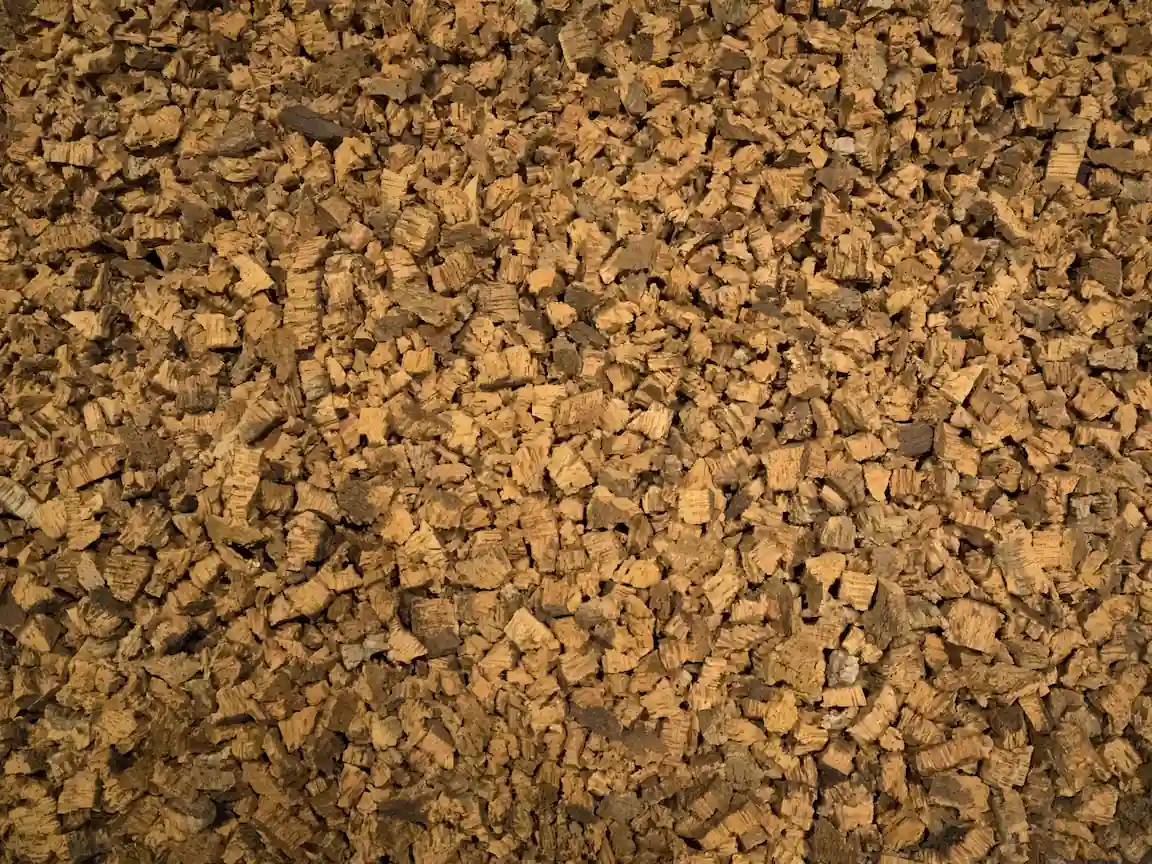

 Why choose cork for thermal insulation?
 Local regulations and tax incentives: the role of cork thickness
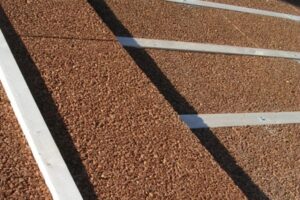
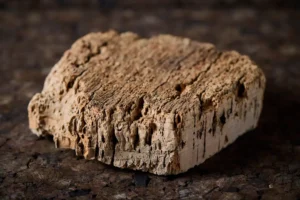
 Due to the growing focus onsustainable building, cork has become a favorite solution for green building and bioarchitecture projects. Among the most recent innovations is the use of cork in composite materials, which combines cork with other elements to enhance performance. In particular, composite panels made of cork and wood or cork and clay have been developed, offering mechanical strength and superior insulation. These materials are mainly used in low-impact construction, where cork plays a crucial role in improving energy efficiency and reducing CO2 emissions.
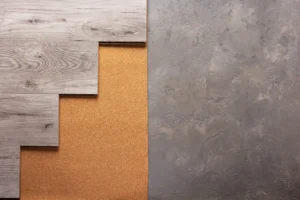 Why cork is an ideal choice for sustainable construction


